



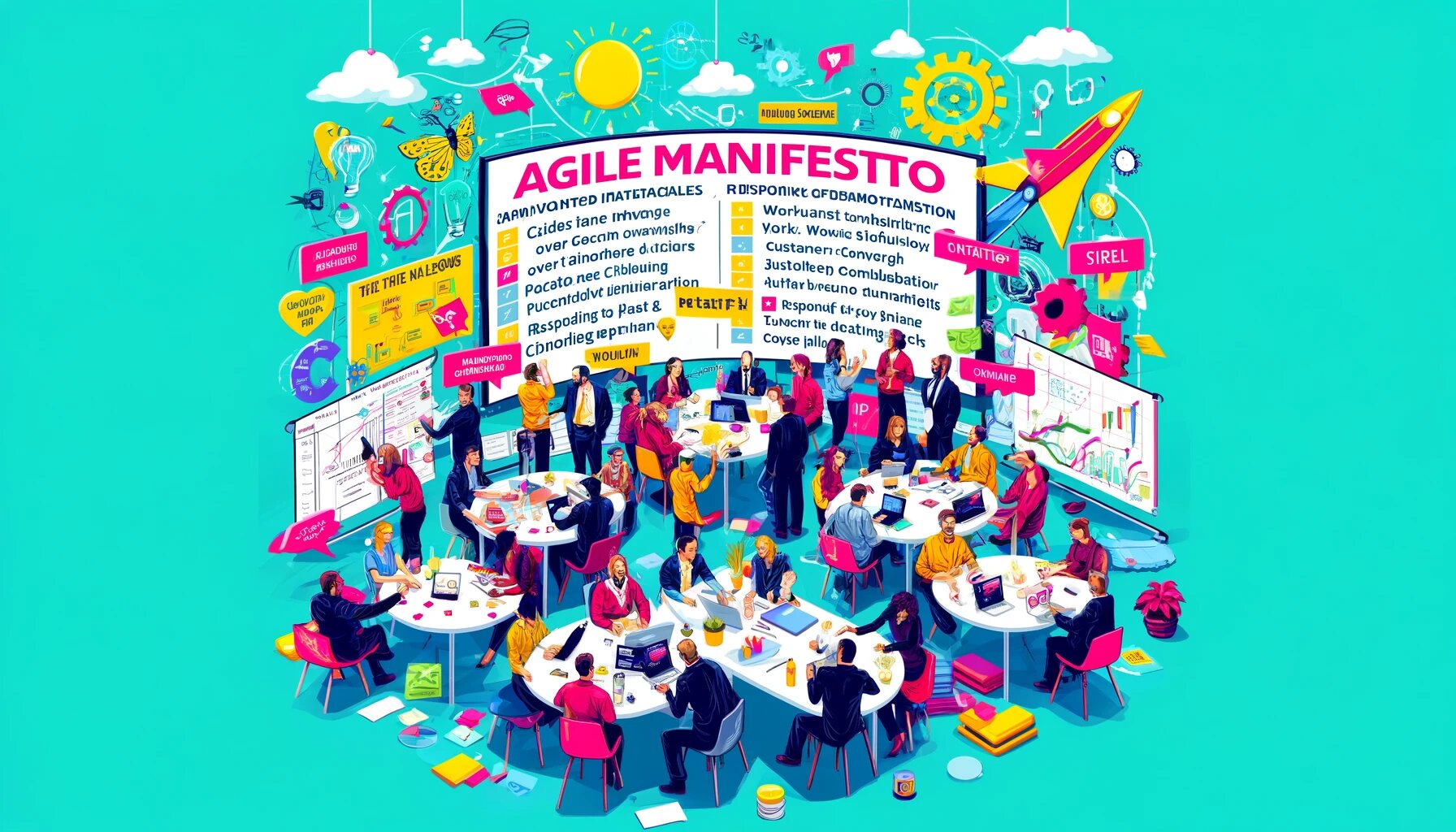
The Agile Manifesto was created in 2001 and revolutionized the process for how software development teams think about their projects. Traditional methodologies the recognition of the need for fast track processes to kick hind progress and adaptability gave birth FOR AGILE MANIFESTO. In this article, I will discuss the core values of Agile Manifesto and its importance in shaping the software development process of today.
It was supposed to be, better-than-what-we-had-before (i.e., the waterfall model) but has now become a fancy name Human-Centered Process. Seventeen thought leaders of the software development industry convened and assembled the Agile Manifesto to experience a flexible, smoother framework for project management. Together, they came up with a set of four values and twelve principles which put collaboration, customer happiness and change response on the methodology forefront.
To Read more about this article READ
- The Four Core Values
People Over Processes and Tools: It highlights the value of communication between people and working collaboratively. It realizes project success depends overwhelmingly on the people and how those teams work together and not just the tools or processes tribes employ.
Vertical Slicing Cross Functional Team Working Software Over Comprehensive Documentation — While documentation is necessary, the most important goals of a software development project is to deliver functional output. By contrast, the Agile approach prioritizes working software that delivers an end user need over large quantities of documentation which may be obsolete as soon as it is written.
Customer Collaboration Over Contract Negotiation: Agile emphasizes the importance of having continuous engagement with clients in order to make sure that the final product matches their changing needs. It suggests that customer feedback and agreement is much more important than getting the contract provision right.
Adapting to Change Over Following a Plan: It is the nature of our high beta release cadence and fast-moving market that requirements change. Agile is all about change and getting prepared for it right from the beginning with adaptability to tweak along the way.
The Twelve Principles of the Agile Manifesto:
- Early and Continuous Customer Satisfaction: Our highest priority is to satisfy the customer through early and continuous delivery of valuable software.
- Accept Changes: Accept, even late in development with the knowledge all changes will maintain your competitive ability or iterate and be a counter to environmental modifications
- Working software is a must: As we need to aim for shortest development cycles, delivering functional software from a couple of weeks to a couple of months.
- Business-Developer Collaboration: Create an atmosphere of cooperation between developers and business.
- Trust Talented and Motivated People: Film projects are built by giving talented people the tools they need, then leaving them to achieve their targets.
- Face-to-Face Communication: The first approach needs to be Face-to-Face Communication because when direct communication is given importance it speeds up things and convey message clearly.
- Software Delivery: Two ways to keep your project from 100%, the simplest work produces software (delivery) deliver means a working software, sheer number of delivers tells you’re advancing delivery is the primary measure or progress.
- Sustainable Pace: Make sure the people can work at a sustainable pace even if that means treading water!
- Technical Excellence & Cleanliness: Following strong technical standards and designing with good craft to further agility and sustainment efforts.
- Simplicity: Keep it simple, make everything as simple as possible to ensure maximum and irrelevant (time-wasteful) work is not done.
- Self-Organizing Teams: Allow the team to organize itself, promoting creativity and innovation.
- Reflect & Improve Regular: Team performance as well as properties should constantly be reflected upon, adjust when needed to increase productivity and value.
History Created by Agile Manifesto
The Agile Manifesto has left a humongous impact of the development lifecycle since its creation. This has eventually moved a lot of us to follow the Agile methodologies (Scrum, Kanban or Lean) and changed our way for managing & delivery projects an evolution. The focus on flexibility, customer collaboration and continuous improvement had allowed them to deliver the right products more effectively as well as respond to market demands.
- ADVANTAGES OF AGILE METHODOLOGIES
More flexibility: Man, team can react quickly to changes within Agile methodologies.
Higher Customer Satisfaction: Regular feedback cycles, and customer commitment means that you build something for the end of your customers.
Improved Team Collaboration: Automation creates an environment of collaboration and communication using Agile.
Better Goods: Practices from continuous testing and integration help in detecting errors soon after they take birth.
Challenges of Agile Adoption
Using Agile methodologies is beneficial; however, it has its challenges. Cultural change and continuous learning and adaptation may prove to be barriers for organizations. It is not enough to call something Agile and the organization needs to stand behind and support development teams in adopting Agile values, principles, compete training.
Conclusion:
The Agile Manifesto continues to be one of the driving factors behind contemporary software development practice by promoting a nimbler, team-oriented and results-focused methodology. More than a decade old, its values and principles still drive the teams in delivering high-quality software efficiently and reliably satisfying evolving demands of the industry.
Agile teams have moved on to deliver the original strategy but now they are adjusting their focus on less crowded landscape of new or in-process backlog items and a whole organization has changed its culture, preselected practice approaches guided by undeniable Agile Manifesto, with ratings as result.
To Read more about this article READ
